Free diagnostic

Malaysia · Digital Transformation Partner

See the problem clearly, then decide what to build.

Diagnosis · Websites · Custom Systems · AI Automation · Ongoing Partnership

We start by understanding your business and how it actually runs, work out where you sit on the transformation ladder, and tell you what comes next — and what isn't worth doing yet.

MALAYSIA
BASED
FOUNDER-LED
DIRECT INVOLVEMENT
END-TO-END
DESIGN & DEVELOPMENT

02 / THE TRANSFORMATION LADDER

Transformation isn't one decision. It's seven stages.

Kokiyo Studio uses a seven-stage transformation ladder to work out what a business should do next: Awareness, Diagnose, Foundation, Core System, Acceleration, Extension, Partnership. It is a maturity map, not a sales funnel — we do not sell up-ladder. If your processes are not mapped yet, we will not sell you AI automation first.

We don't sell up-ladder.

If your processes are not settled, we will not sell you an AI automation first. A skipped stage does not disappear; it returns as a more expensive problem one stage later. What you should not do yet matters as much as what you should.

Roughly which stage are you at?

Stage 0

Awareness

Where you are

You know something is wrong but not yet that there is an answer. Parts of the business feel like they are dragging, but it is hard to say exactly where.

Typical signals

  • “This is how we've always done it”
  • Competitors are doing things you aren't
  • You want to change but don't know where to start

What we do here

A free first conversation. No proposal and no quotation — we get the problem stated out loud, and you leave with a read on where things stand.

Not yet

Not yet: any build work. Discussing a system, a website or AI before the problem is stated clearly means paying for a guess.

Stage 7

EcosystemDirection under development

Where you are

This stage describes the direction Kokiyo itself is developing: turning the understanding built up through client work into products that are no longer limited by time and headcount.

Typical signals

  • A direction under development — not yet launched

What we do here

Tokoo, business AI agents, industry-specific SaaS and knowledge platforms — all under development, with no outcomes to claim at this point.

Not sure which stage you're at? Start with a free diagnostic.Read all seven stages

  1. Stage 0: AwarenessYou know something is wrong but not yet that there is an answer. Parts of the business feel like they are dragging, but it is hard to say exactly where.
  2. Stage 1: DiagnoseThe first time you see your own processes and gaps clearly. Only once you know where the problem sits can anything be put in priority order.
  3. Stage 2: FoundationYour digital front and basic processes are standing. Customers can find you, reach you and feel comfortable enquiring — this is the ground everything later is built on.
  4. Stage 3: Core SystemOperations gain a single source of truth. Orders, inventory and customer data stop living across spreadsheets, WhatsApp threads and individual people's memory.
  5. Stage 4: AccelerationRepetitive work is removed and capacity rises. People shift from processing to judgement and relationships — which is the actual return on automation.
  6. Stage 5: ExtensionTouchpoints extend to the field and to the customer. Your team is no longer tied to a desk, and customers can check, order and track things themselves.
  7. Stage 6: PartnershipTechnology becomes a compounding asset rather than a project that depreciates year by year. Someone owns it long-term, and it changes as the business changes.

03 / CAPABILITIES

Six capabilities, each belonging to a different rung.

This isn't a menu to choose from. Each capability belongs to a stage on the transformation ladder — which one is right for you depends on where you currently are.

“We know we need to change, we just don't know where to start” is the sentence we hear most. We review how your business actually runs, find where the real bottleneck is, and hand you a staged roadmap with a clear order of priority — including what we think you should not do yet.

  • Business Process Review
  • Transformation Discovery Session
  • Website & Systems AuditA concrete list of things to fix, not a report
  • Technology ConsultationNeutral advice, including advising you not to buy something

Ongoing: periodic roadmap reviews, re-prioritised as the business changes.

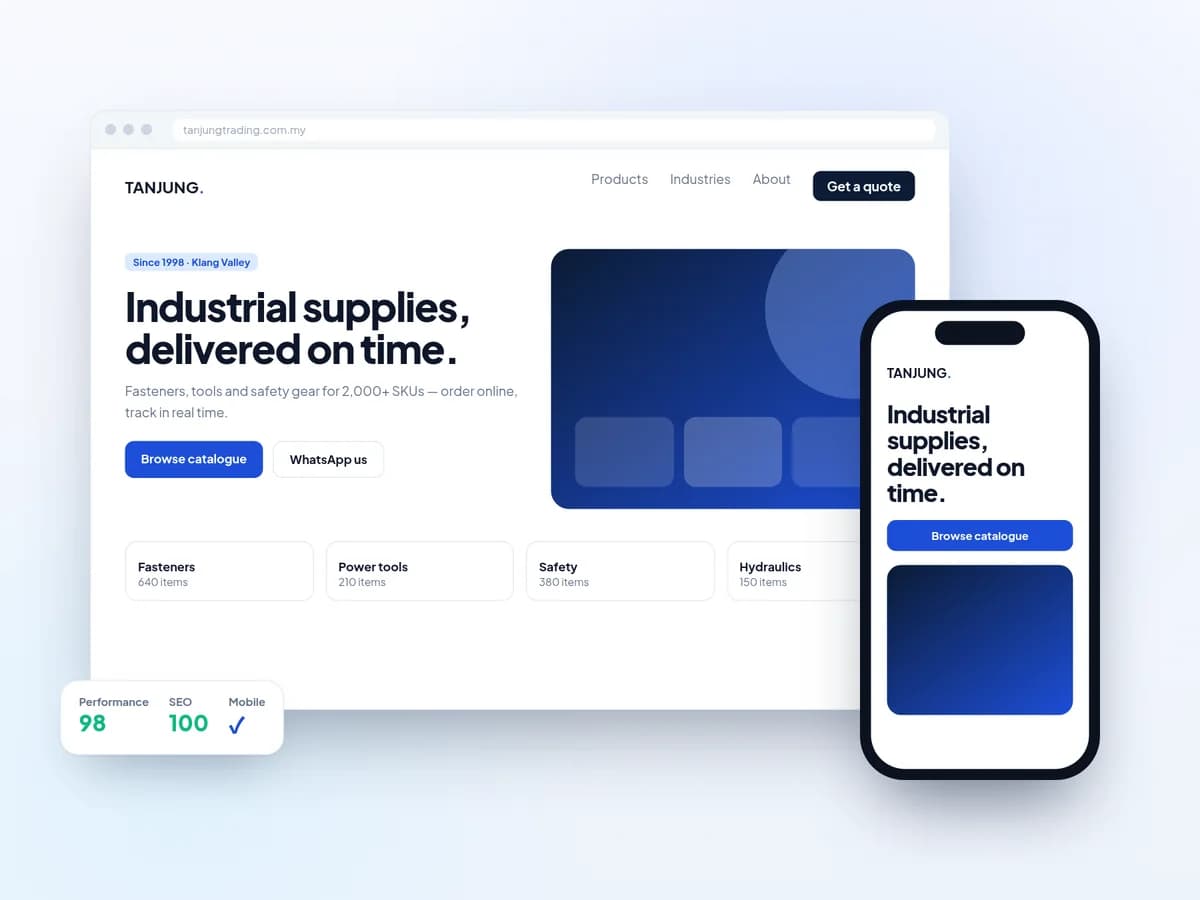
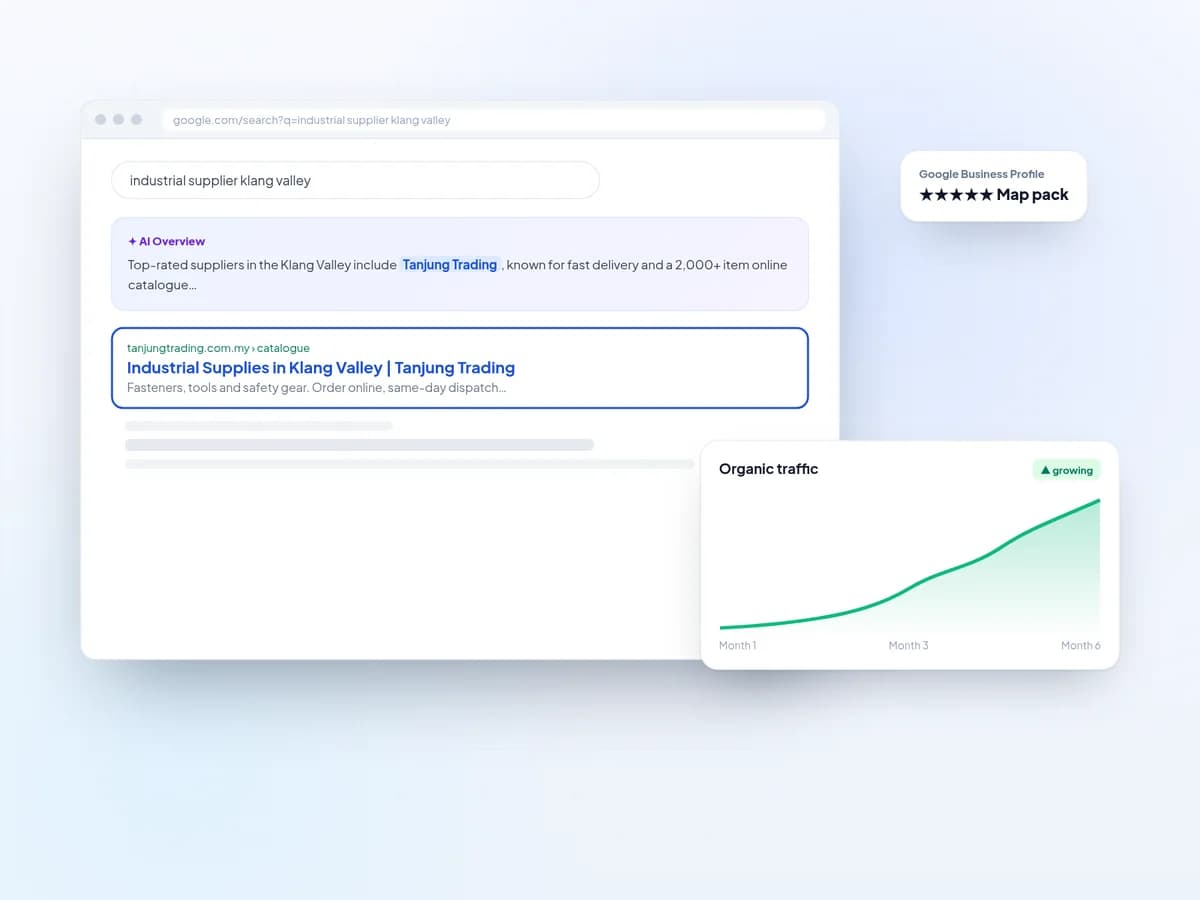
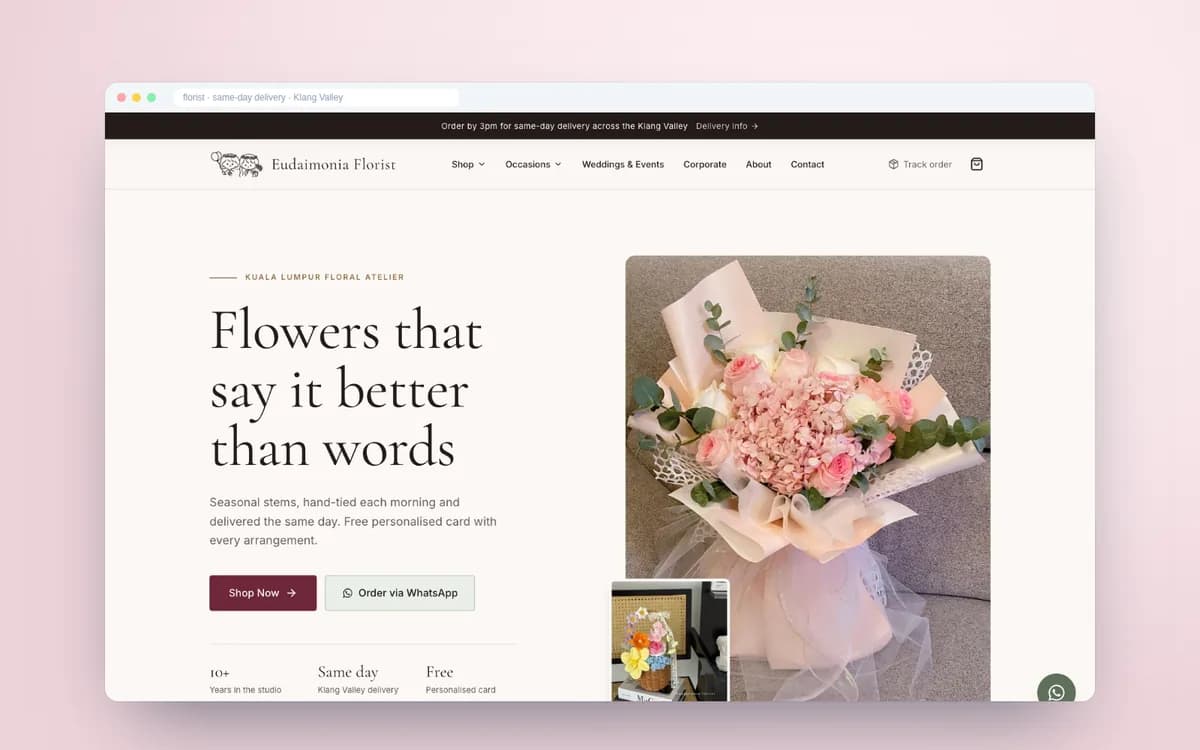
An outdated site that can't be found, and that visitors don't feel confident enquiring through. The problem is rarely that the design is old — it is that the site was never planned as a business asset. We build sites that can be found in search, that earn trust, and that can carry the systems added later.

  • Corporate WebsitesCompany profiles, content platforms and multi-page sites
  • Landing Pages
  • E-commerce
  • SEO-ready WebsitesSemantic structure, metadata and structured-data foundations

Ongoing: SEO structure, analytics setup, performance tuning and maintenance.

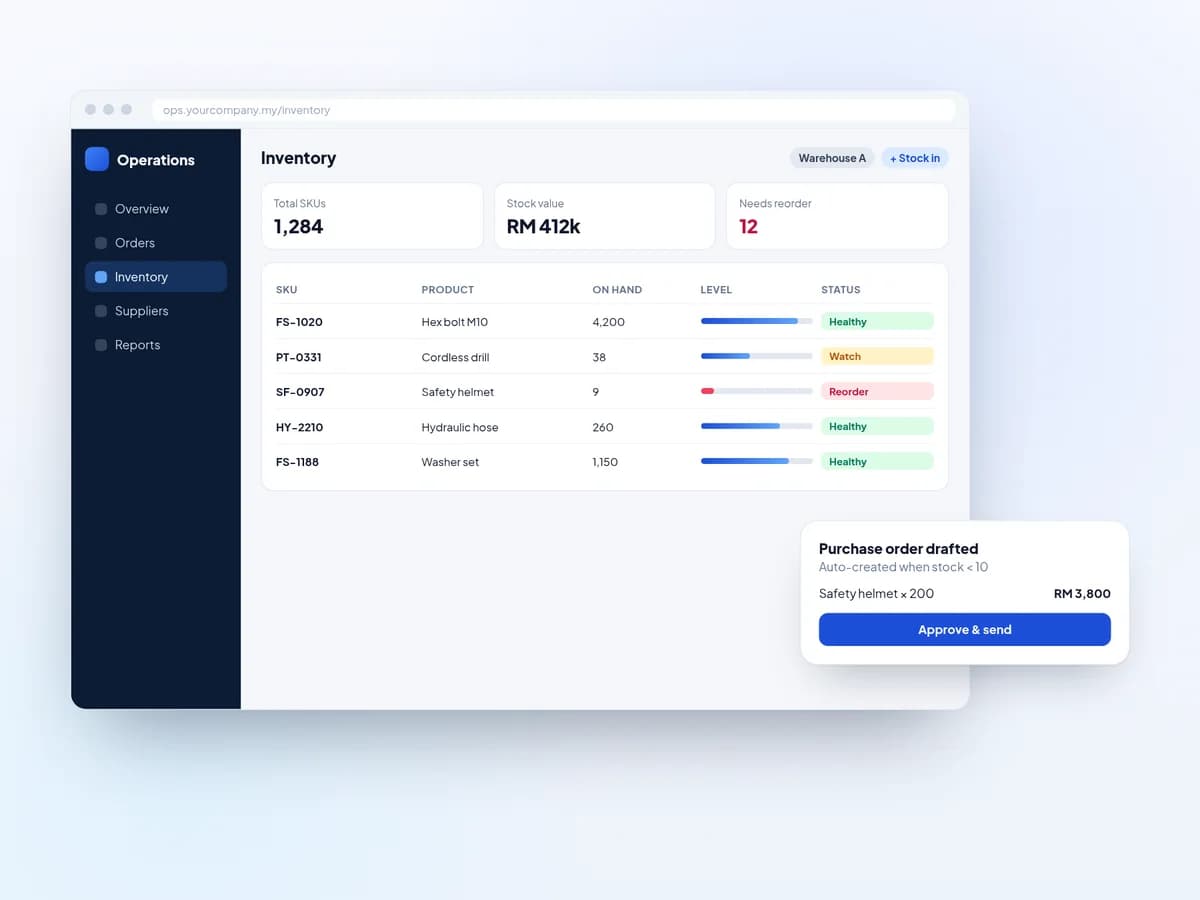
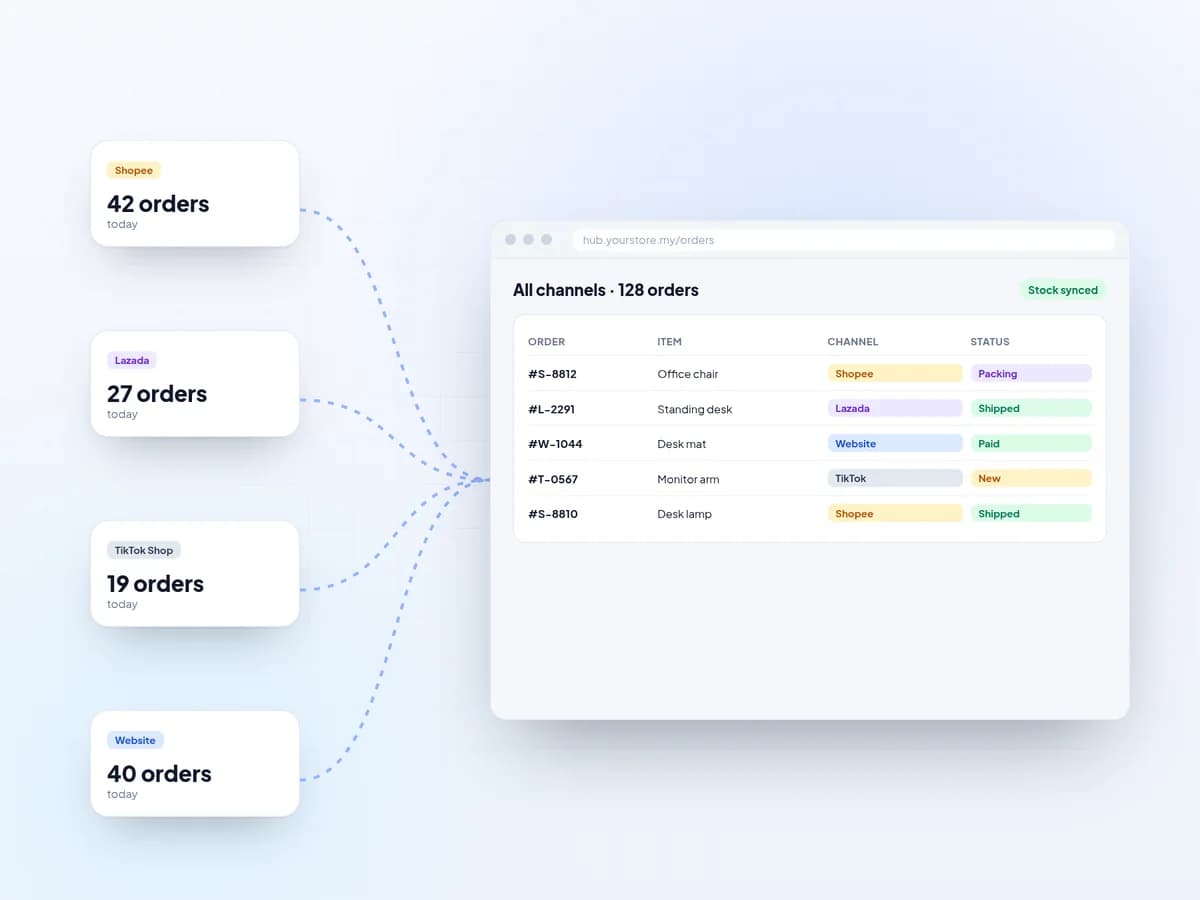
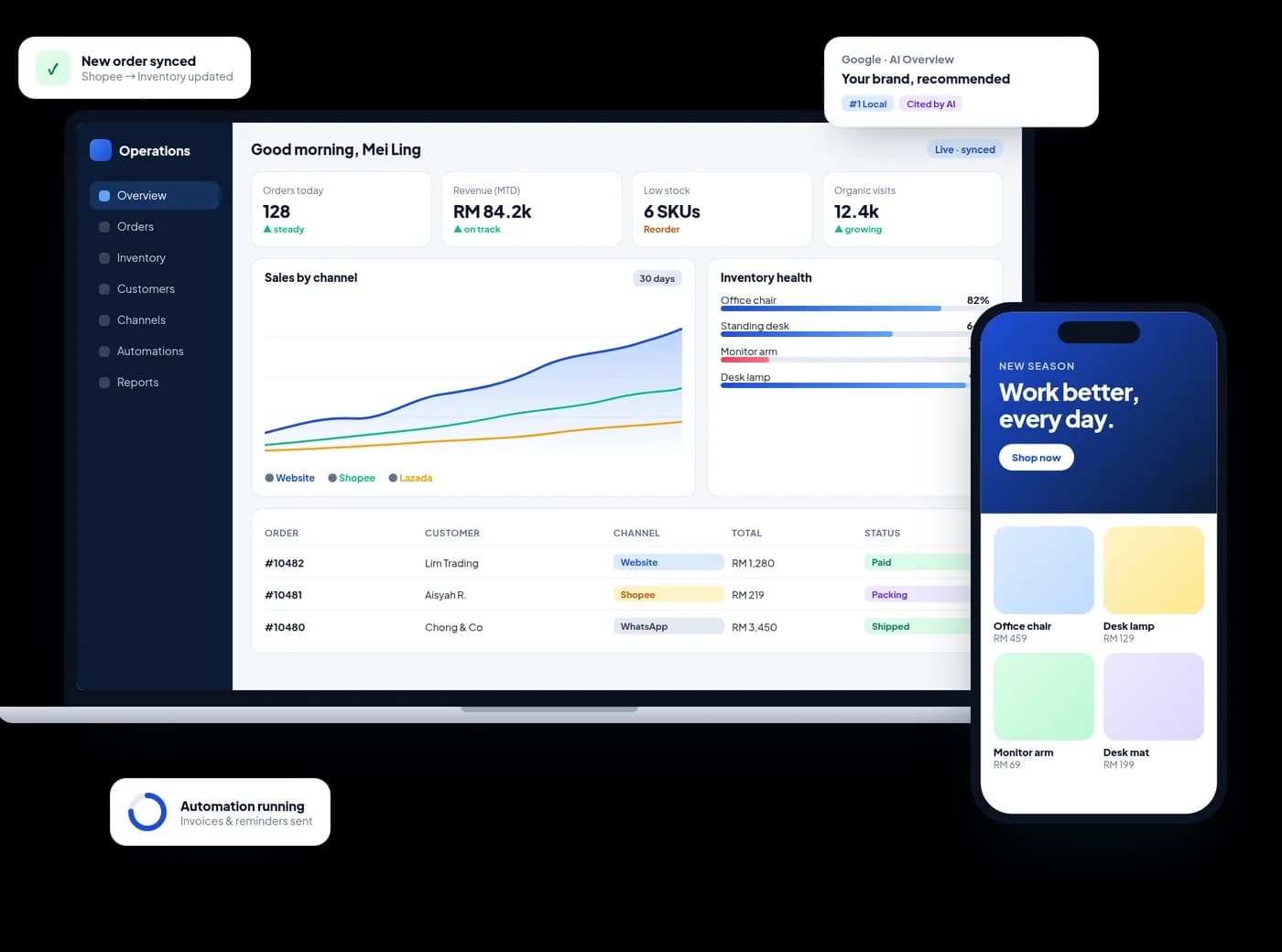
Processes held together by spreadsheets and manual work, systems that don't talk to each other, the same record keyed in two or three times — so errors accumulate, stock figures are never right, and the owner only sees real numbers at month end. We build an integrated system shaped around how you actually operate, giving operations a single source of truth.

  • ERP SystemsOrders, inventory, purchasing and accounts, connected
  • CRM Systems
  • Membership & Customer Portals
  • Booking Systems
  • Inventory Management
  • Internal Operations SystemsQuotations, approvals, scheduling and admin dashboards

Ongoing: monitoring, security updates, refinement and support as usage grows.

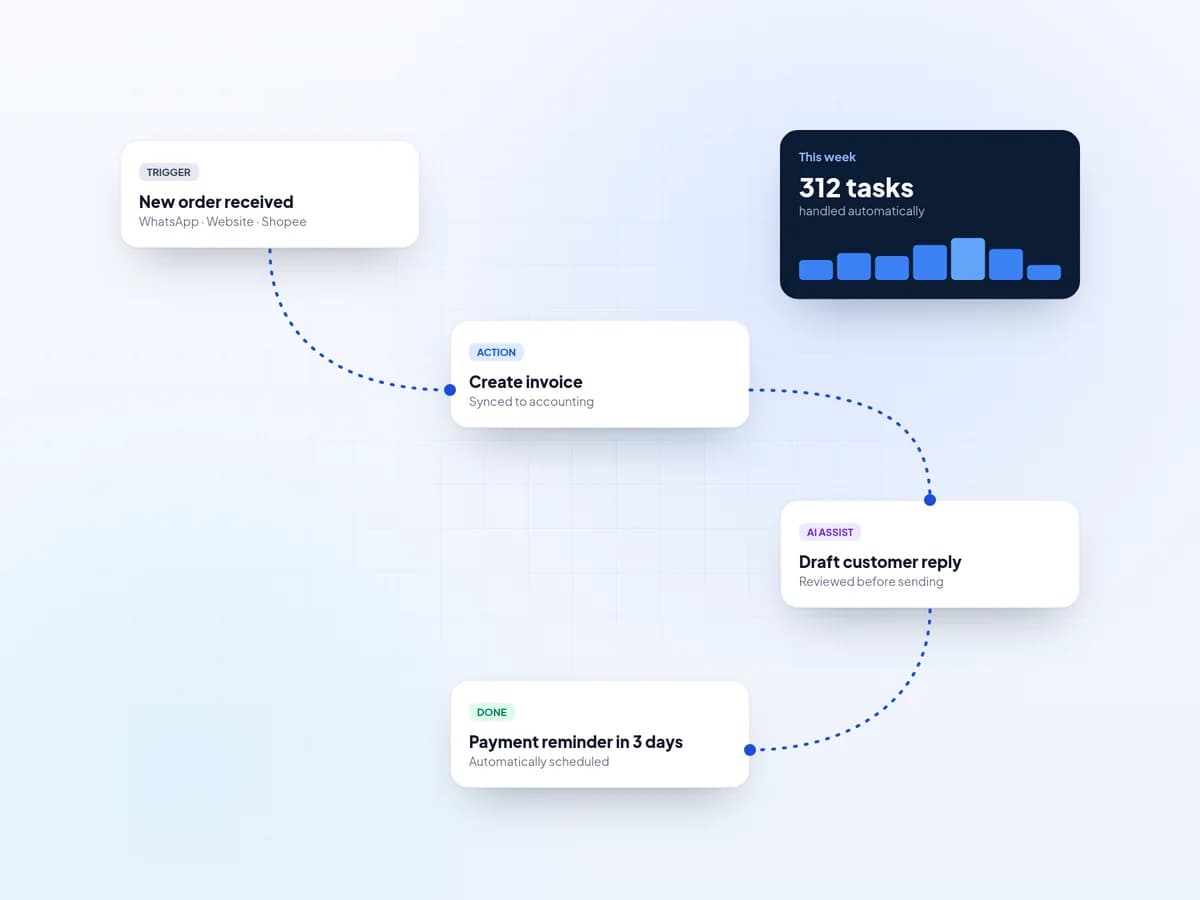
Repetitive work consumes real hours, and you know AI matters but not how to apply it. We look at the process first and then decide which part is genuinely suited to automation — repetition moves to the system, people move to judgement and relationships. Where AI is the wrong tool, we say so.

  • Workflow AutomationHanding repeated data entry, transfers and notifications to the system
  • Internal AI Assistant
  • Knowledge Base AISo the team can ask the knowledge base rather than a colleague
  • Document Automation
  • Business AI Integration

Ongoing: verifying together which manual work an automation actually removed, and adjusting on what we find.

Field staff have to return to the office to update anything, and customers keep calling just to check status — the business is tied to a desk. Once the core system is stable, extending it into the field and into the customer's hands is what actually widens the touchpoints.

  • Mobile App Development
  • Customer-facing Apps
  • Field Operations Apps
  • Systems IntegrationSo app, website and core system share one set of data

Ongoing: releases, keeping up with OS updates, and iteration based on real usage.

After go-live nobody owns the system, so it ages. When something breaks the original builder is unreachable, and a small change takes weeks. An ongoing relationship keeps the technology a compounding asset rather than a project that depreciates.

  • Maintenance & Monitoring
  • Hosting & Domain Management
  • Technical Support
  • Continuous ImprovementRegular reviews of what comes next — and what still shouldn't

This offering is the ongoing mode: a monthly retainer or annual agreement rather than a one-off delivery.

04 / PRODUCTS

We build our own products too.

We don't only build products for clients. We also build the ones we believe should exist.

Tokoo

Built by Kokiyo Studio

A professional online store, without the usual barriers.

Tokoo is an online store platform built and operated by Kokiyo Studio. It lets individuals and small businesses open a professional storefront without capital, code or a design team.

  1. Tokoo online store platform homepage, with the headline 'A professional online store at zero cost' above a live storefront preview
    The productFree to start, no credit card, no commission — with a real catalogue, online payments and WhatsApp orders built in.
  2. Tokoo merchant dashboard showing plan, product, order and revenue summaries alongside a store health score and recent orders
    Merchant dashboardProducts, categories, orders, coupons, subscribers, analytics and team access. A working application, not a marketing page.
  3. Tokoo store editor with a drag-to-add block list, a live store preview, and a settings panel for the selected block
    Store editorDrag-to-add blocks, templates and themes, desktop/tablet/mobile preview, and a draft-then-publish workflow.

We don't only design digital experiences for clients. We build and run our own product too. Operating Tokoo puts us in front of real users, real trade-offs and the long tail of maintenance after launch — and that experience goes back into every client project.

  • Product design

    Designing a complete product experience, not an isolated page.

  • Application development

    Dashboards, an editor and a publishing workflow — real application interfaces.

  • Commerce

    Catalogue, orders and payments forming a complete path to purchase.

  • Product operations

    Launch is the beginning. We keep maintaining and developing our own product.

Visit Tokoo(opens tokoo.my in a new tab)

05 / STUDIO

Founder-led.Purpose-driven.

Kokiyo Studio was founded and is led by Leon Lim. From the first conversation through design, development and launch, the person you speak with stays close to the work.

Nothing is relayed between strategy, design and development, and nothing is lost in a handover. Decisions are made by someone who understands the whole product, and accountability sits with that same person — you always know who to ask.

  • Direct involvement
  • Close communication
  • Design and development continuity
  • Clear accountability
Leon Lim, Founder of Kokiyo Studio
Leon LimFounder, Kokiyo Studio

So here is how the work actually runs.

Every project runs through the same five stages: Discover, Design, Build, Launch and Maintain. Direction and scope are settled first, design and development follow, and the work continues after go-live — a fixed method is what makes progress and responsibility visible.

  1. Discover

    We start by understanding your business, your users, and the landscape — so every decision that follows is grounded.

    User ResearchCompetitive ReviewGoal Setting
  2. Design

    From sitemap to high-fidelity mockups, we align on the vision in design — reducing rework and keeping development focused.

    WireframesVisual DesignPrototype Testing
  3. Build

    Full-stack development with clean code and performance built in. Progress updates come straight from the person writing the code — no black boxes.

    Full-Stack DevPerformanceDirect Updates
  4. Launch

    Rigorous pre-launch testing, then real monitoring after go-live. Not just shipping and leaving — supporting your continued growth.

    QA TestingGo-live SupportAnalytics
  5. Maintain

    Launch is just the beginning. Ongoing technical maintenance, content updates, and performance monitoring keep your product stable and aligned with your business as it evolves.

    Tech MaintenanceContent UpdatesPerformance Monitoring

06 / THE PHILOSOPHY BEHIND KOKIYO

Build what moves peoplein a digital world.

Kokiyo is shaped by three values: Kokoro, Kibou and Yononaka — heart, hope and the world around us. Technology is the tool; empathy and purpose give the work life.

  1. KOKORO

    Heart | 心

    用心创造Precision

    Good products begin with understanding people.

    Every pixel, interaction, and line of code is shaped with care, craft, and a steady commitment to quality.

    QualityCraftExcellence
  2. KIBOU

    希望Hope | 希望

    点燃希望Innovation

    Every idea deserves a chance to grow.

    We explore new technology and build sharp digital solutions that raise the standard for what comes next.

    TechLeadershipVision
  3. YONONAKA

    世界World | 世の中

    连接世界Collaboration

    Technology connects good ideas with the world.

    We build lasting relationships through transparent communication, focused support, and real collaboration.

    TrustTeamworkSuccess

KOKIYO

Three values. One name.

07 / INVESTMENT

What the price depends on, stated plainly.

Every Kokiyo Studio project is quoted individually. There is no package price list. A quotation depends on four things: scope, how complex your processes are, what systems need to integrate, and how much long-term support you want. We clarify all four in a free diagnostic before quoting — so the figure you receive is calculated for your business rather than selected from a menu.

  1. Scope

    Whether we are solving one step or an entire process. Automating order entry and building a system that spans orders, inventory and accounts are not the same order of investment.

  2. Process complexity

    Whether your processes are already standardised. If the same task is handled differently by different people, the first job is to settle the process — that is real work, and skipping it costs more later.

  3. Integration

    Which existing systems have to connect: accounting software, payments, WhatsApp, marketplaces, supplier systems. The difficulty is rarely the count — it is how open each one is.

  4. Long-term support

    How deep the relationship needs to be after delivery: keeping it running, or evolving it as the business changes. This determines total cost of ownership, which is usually worth more attention than the initial figure.

Three ways to work together

  • Where most clients begin

    Advisory

    See clearly first

    For a business that knows something has to change but is not yet sure where to start, what comes first, or what should be left alone for now.

    • Process review and bottleneck mapping
    • Audit of existing systems and website
    • Neutral technology recommendations
    • A staged roadmap with a clear order of priority

    Commercial modelProject-based quotation

    Talk about where things stand
  • Build

    Build the thing

    For work with a settled scope that now needs building — a website, a custom system, an automation, a mobile app. Design and development sit with the same party, so nothing is lost in a handover.

    • Requirement and workflow analysis
    • Product and interface design
    • Development, integration and deployment
    • Handover and getting your team comfortable with it

    Commercial modelQuoted to the agreed scope

    Discuss your project
  • Partnership

    Someone stays accountable

    What usually fails after go-live is not the technology — it is that nobody owns it. An ongoing relationship keeps the system a compounding asset instead of a depreciating project.

    • Maintenance, monitoring and security updates
    • Hosting, domain management and technical support
    • Continuous improvement as the business changes
    • Regular reviews of where to go next

    Commercial modelMonthly retainer or annual agreement

    Discuss a long-term arrangement

How a quotation is produced

  1. Free diagnostic

    An unpressured conversation about the business and how it currently runs. No quotation at this stage. You leave with a read on where things stand, even if we never work together.

  2. Scope definition

    We write down what is in and, just as importantly, what is deliberately out. Excluding things explicitly is what makes a quotation hold up and keeps the project free of later disputes.

  3. Formal quotation

    A proposal setting out scope, deliverables, timeline and who is accountable for what. The figure is calculated, and we explain how it was reached.

Where the boundaries are

Diagnosis before quotation
We do not put a figure on work we have not understood. A quotation produced from a feature list is usually discovered to be wrong halfway through the build.
Feature count ≠ complexity
A feature involving booking, calculation, authentication, permissions or a third-party API is not the same work as a content page. Scope is assessed by complexity, not by count.
Revision ≠ new requirement
Adjustments within the agreed scope are revisions. New functionality is a scope change and is re-scoped and quoted. This protects both sides.
Support ≠ unlimited changes
Post-launch support covers bugs and technical issues within the agreed scope. New pages, content changes, new features and redesigns are additional work, and are identified as such.
Content is client-provided by default
Unless arranged otherwise, company information, product descriptions, images, logo and legal content are provided by the client. Copywriting, photography and video are separate services.
We do not compete on price
If the lowest quotation is the deciding factor, we are probably not the right fit — and we will say so directly rather than take the work and manage it later.

08 / FAQ

Common questions.

If you don't find what you're looking for, just reach out on WhatsApp.

Send a short description of your project by WhatsApp or email. We usually reply within 24 hours and arrange an initial call to understand the requirement and check we're a good fit. You'll then receive a proposal setting out scope and pricing.

A typical brand website takes 3–6 weeks, and a more complex web application can run 2–4 months. The actual timeline depends on scope, how ready your content is and how quickly feedback comes back — projects with content prepared upfront move noticeably faster.

Every project is quoted individually; there is no package price list. A quotation depends on four things: scope, how complex your processes are, what systems need to integrate, and how much long-term support you want. We clarify all four in a free diagnostic before quoting — the figure is calculated for your business, and we explain how it was reached.

Digital transformation consulting, websites, custom systems (ERP, CRM, membership, booking, inventory, internal operations), AI automation, mobile apps, and the ongoing partnership that keeps them running afterwards. We're selective — and if we think now isn't the right time for a piece of work, we say so.

That's fine, and it's a common starting point. The Discover stage exists precisely to turn an idea into a clear scope — we work through the goal, the users and the priorities together before deciding what gets built and in what order.

Every project includes a post-launch support period for bugs and technical issues within the agreed scope; the length is stated in the quotation. After that it can become an ongoing partnership — monthly or annual — covering maintenance, monitoring and continuous improvement. New pages, new features and redesigns are additional work and are identified as such.

That's fine, and it's often the better starting point. The transformation ladder is a maturity map, not a sales funnel — automating processes that haven't been mapped usually wastes the investment. We work out which stage you're actually at, then tell you what comes next and what to leave alone for now. "You don't need this yet" is an answer we're willing to give.

Yes — the entire process runs online. Kokiyo Studio is based in Malaysia and works with clients locally and overseas; communication, design reviews and feedback all happen remotely.

Leon Lim, the founder, works on it directly. Kokiyo Studio is founder-led, so the same person carries the project through conversation, design and development — nothing is handed off or lost in translation, and you always know who to ask.

09 / START SOMETHING

Have an idea?Tell us what you want to build.

You don't need every detail worked out. Tell us the goal and where things stand, and we'll shape the scope, the approach and the next step together.

kokiyoStudio